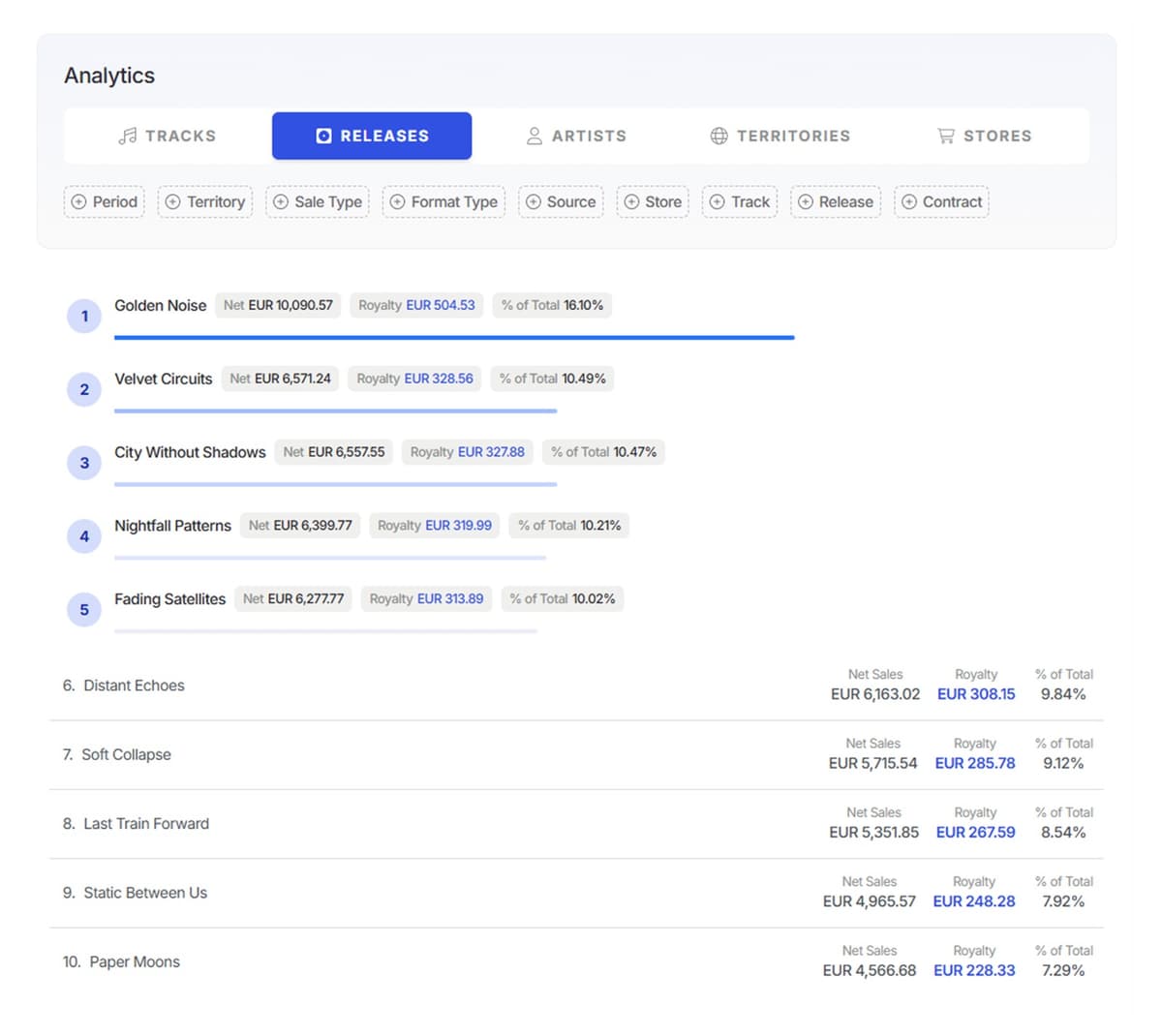
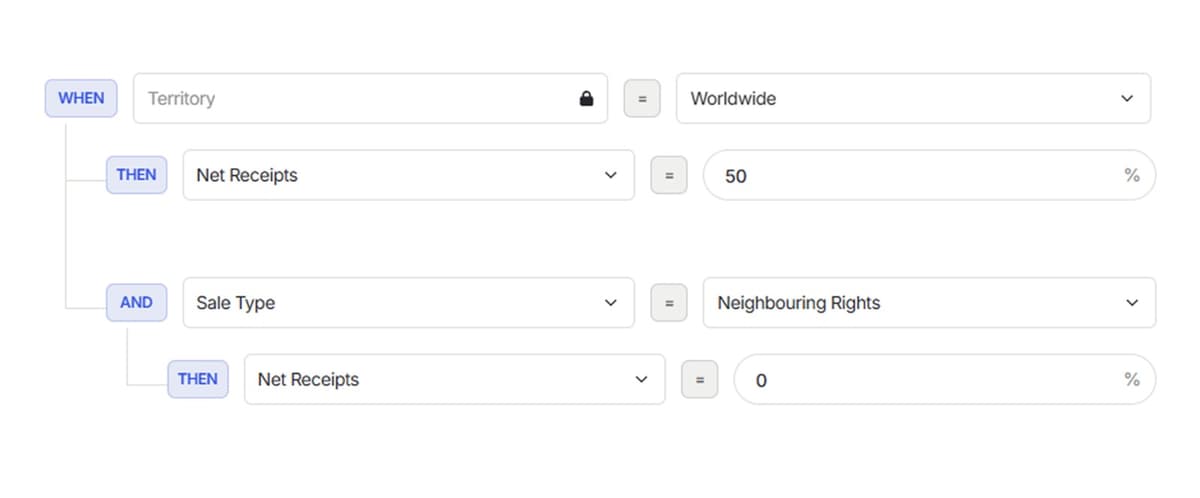
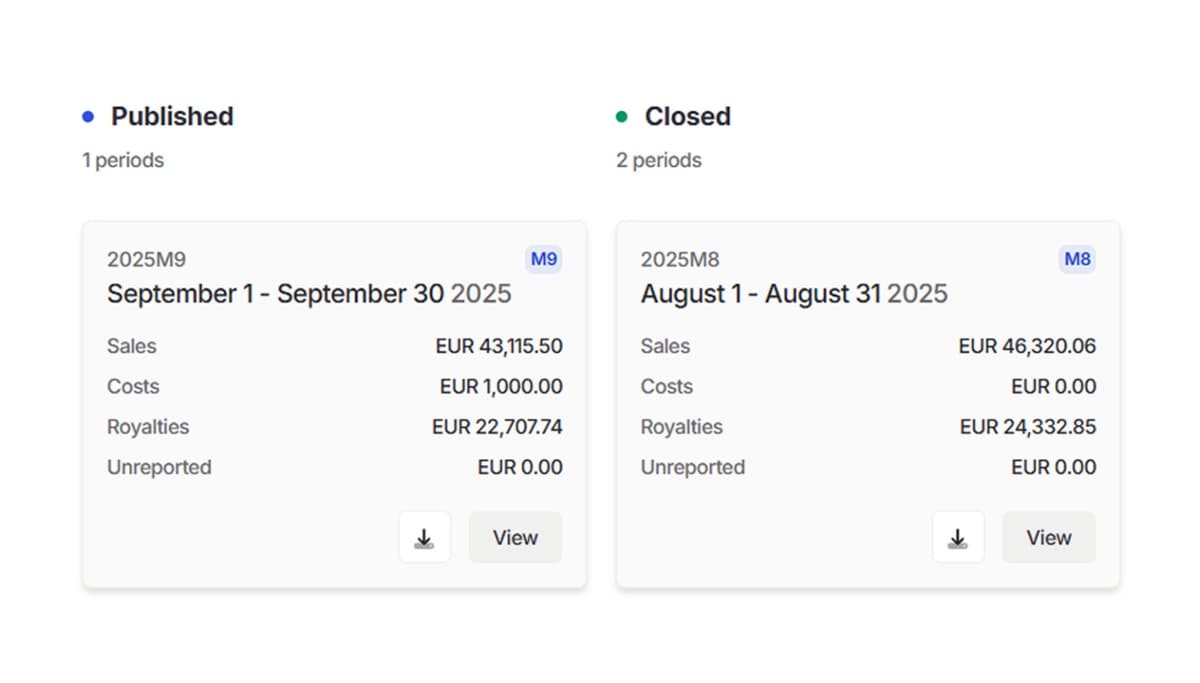
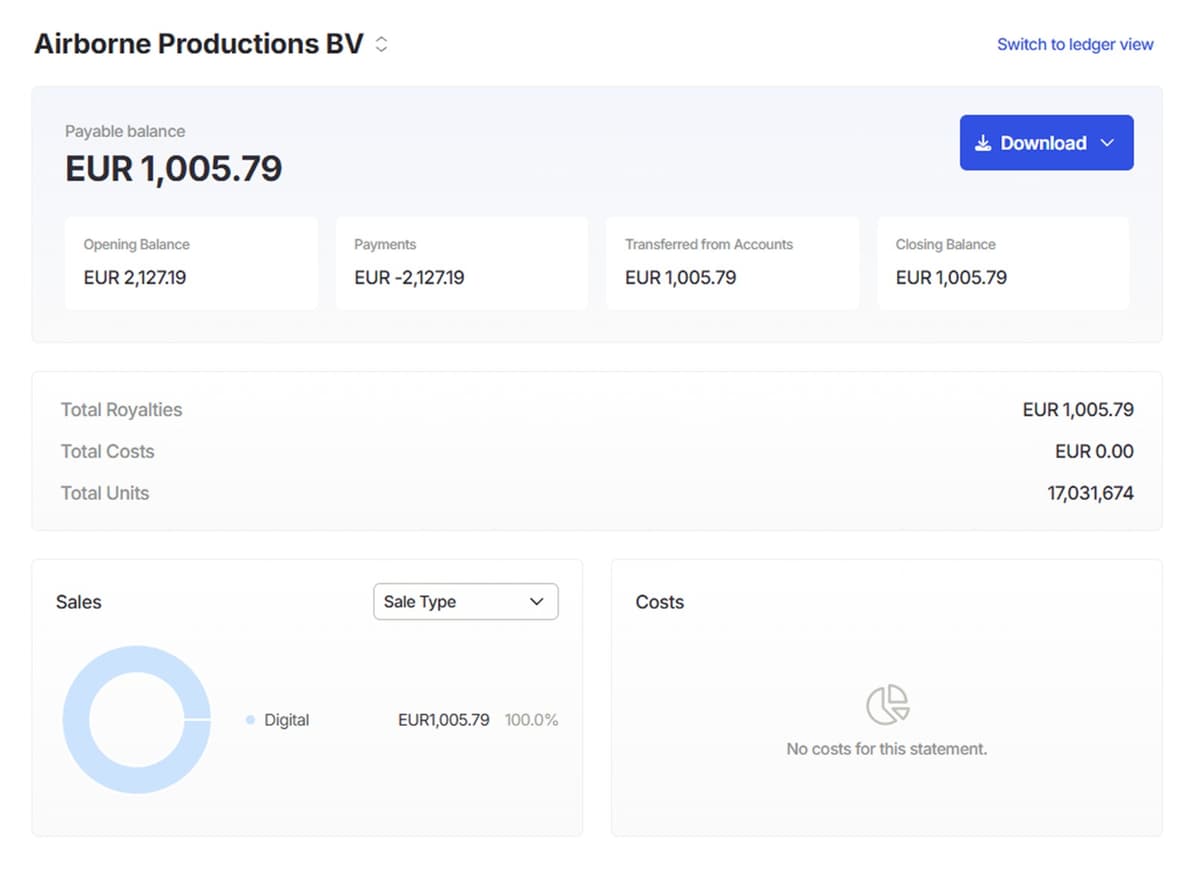
| Qlero | Reusable file maps, tree-structured deal models, period control, and artist statements.Qlero workflow | Walk through your master-royalty period and confirm migration, publishing requirements, and the sales-row pricing scope. |
|---|
| Curve | Its documentation connects sales templates, catalog, contracts, payees, periods, and statements.Curve documentation | Demonstrate your contracts and reporting cycle, then confirm which company and reporting capabilities are included in the proposed plan. |
|---|
| Tone | Its product page describes revenue tracking, contract simulation, period processing, statements, and integrated payments.Tone product overview | Demonstrate your reconciliation and cost treatment, then confirm payment availability, fees, and support for your operation. |
|---|
| Royalti | Its product page describes statement imports, splits, advances, recoupment, reporting, and artist portals.Royalti product overview | Run your actual agreements and source files, and confirm the plan limits and billing basis for your expected volume. |
|---|
| LabelGrid | Its accounting page describes royalty calculation, splits, and statements within its label platform.LabelGrid accounting overview | Clarify how your existing distribution setup, outside-source income, agreement exceptions, and reporting periods would fit. |
|---|