How often should a record label send royalty statements to artists?
Most labels send royalty statements quarterly or semi-annually, but the correct answer is the reporting period stated in the artist, producer, license or distribution agreement. There is no single global rule that applies to every country or every deal.
For a professional label, the key is consistency. Artists should know when statements are issued, what sales period they cover, which income sources are included, which deductions have been applied and when payment will be made. Streaming has also made reporting more complex because income arrives from many platforms, often in large data files and on different schedules.
Should statements be sent to each member of a band or only to the group?
It depends on who signed the agreement and how the rights are owned. If the contract is with a legal entity, such as a band company, partnership or main artist account, one statement to that contracted party may be enough. If each member has a separate royalty share, performer share, writer share or contractual entitlement, separate statements are usually clearer and safer.
Good royalty management should show the split logic behind every payment. A band may have one master royalty statement for the recording, while individual members may need separate reporting for writer shares, performer rights, neighbouring rights or internal band splits.
How is royalty accounting for vinyl and CD sales different from digital royalties?
Physical royalties are usually based on manufactured or sold units, wholesale price, retail price, dealer price or net receipts, depending on the contract. They may include reserves for returns, packaging deductions, manufacturing costs, freight, discounts and stock adjustments.
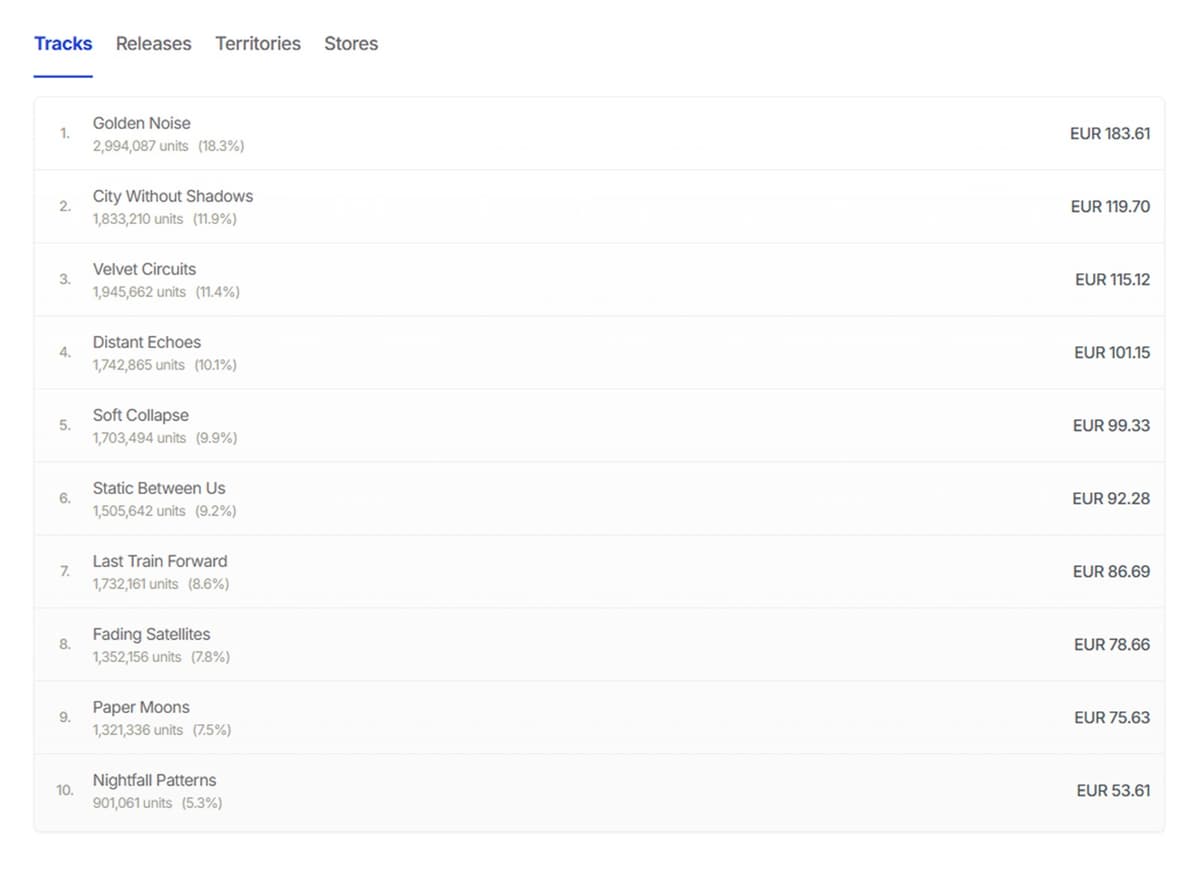
Digital royalties are normally calculated from platform income or distributor income after the relevant fees, taxes, currency conversion and contractual deductions. Streaming statements often contain large volumes of track-level, territory-level and platform-level data. Physical formats also remain commercially relevant: IFPI reported that global physical revenues declined in 2024, while vinyl revenue still grew and streaming remained the largest recorded music revenue driver.
Does a music publisher receive master royalties?
Usually, no. A music publisher normally handles rights in the composition: melody, lyrics and the underlying musical work. Master royalties come from the sound recording and are usually controlled by the record label, master owner, distributor or artist who owns the recording.
A publisher may receive money connected to the master only if the publisher also owns or controls master rights, has a separate label agreement, owns a share of the recording, or has negotiated a specific participation. In standard music industry language, publishing and master rights are separate rights streams.
What is the difference between master rights and individual rights?
Master rights relate to the actual sound recording. That means the recorded track released on Spotify, Apple Music, vinyl, CD, download stores, radio, television or other services.
Individual rights can refer to several things, depending on context. They may include songwriter shares, producer royalties, performer rights, neighbouring rights, featured artist royalties, session musician rights or internal band member splits. In Europe, neighbouring rights and performer remuneration can be especially important because performers and recording rightsholders may be paid through organisations such as PPL in the UK or equivalent organisations in other countries.
Should master rights and individual rights have separate royalty statements?
In most cases, yes. Separate statements make the reporting easier to understand and reduce the risk of mixing different rights types. A master royalty statement may show recording income, recoupment, distribution fees and label deductions. A writer, publisher or performer statement may need different fields, different income sources and different rules.
Some businesses still combine everything in one PDF, but that can become confusing when a person has several roles: artist, writer, producer, label partner and performer. A clear royalty system should separate rights types while still showing the full picture for each payee.
How does Qlero support royalty management?
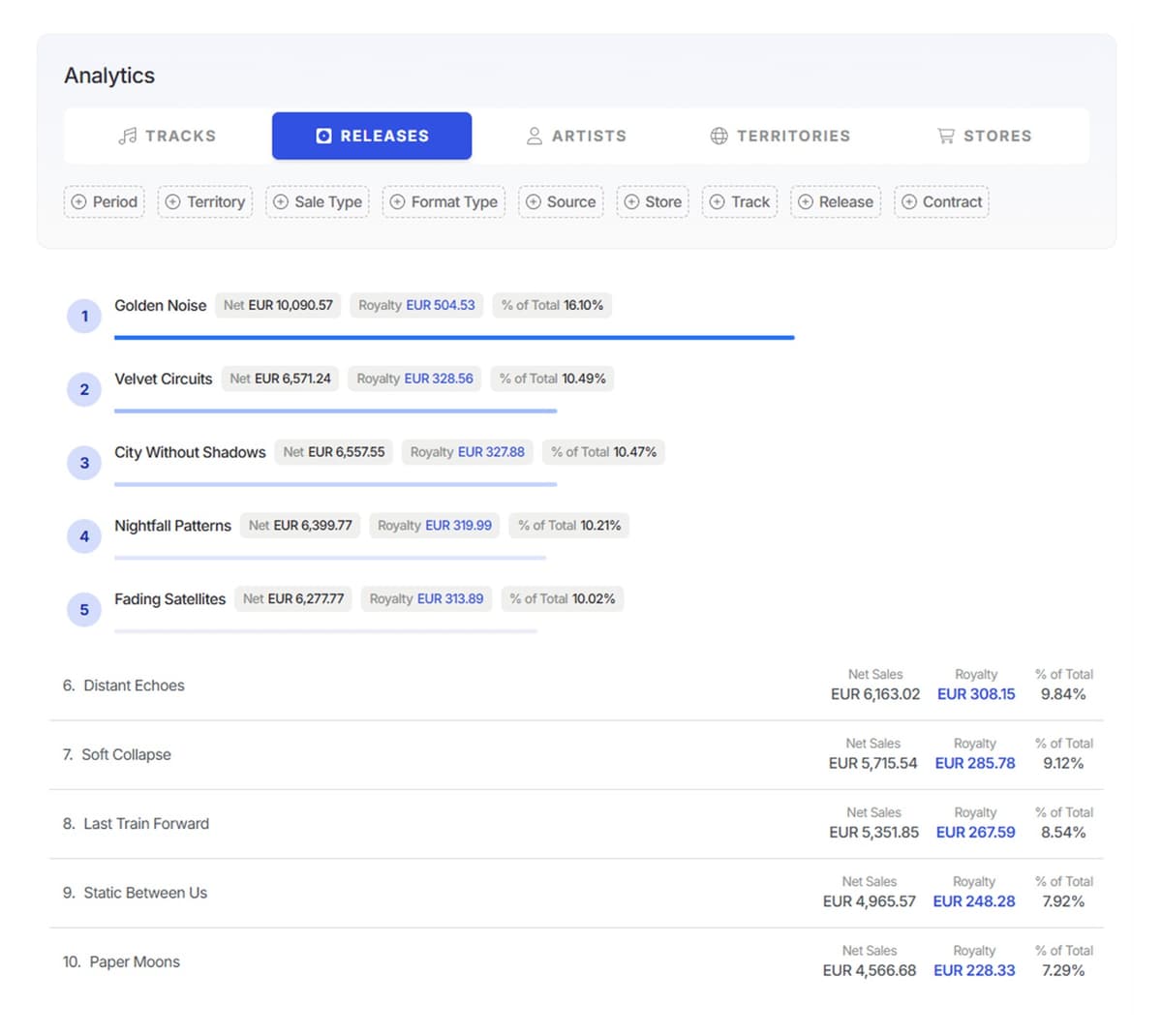
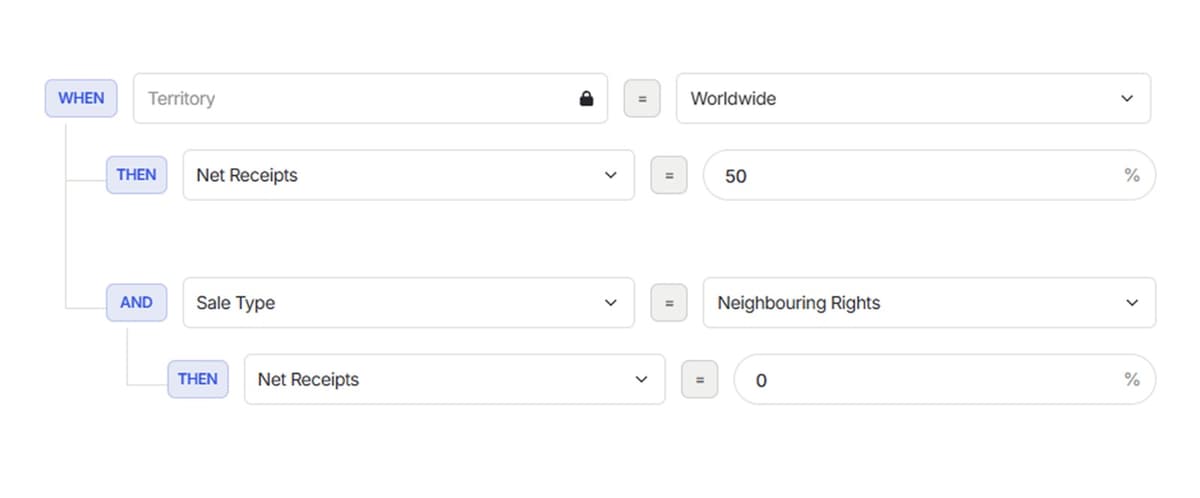
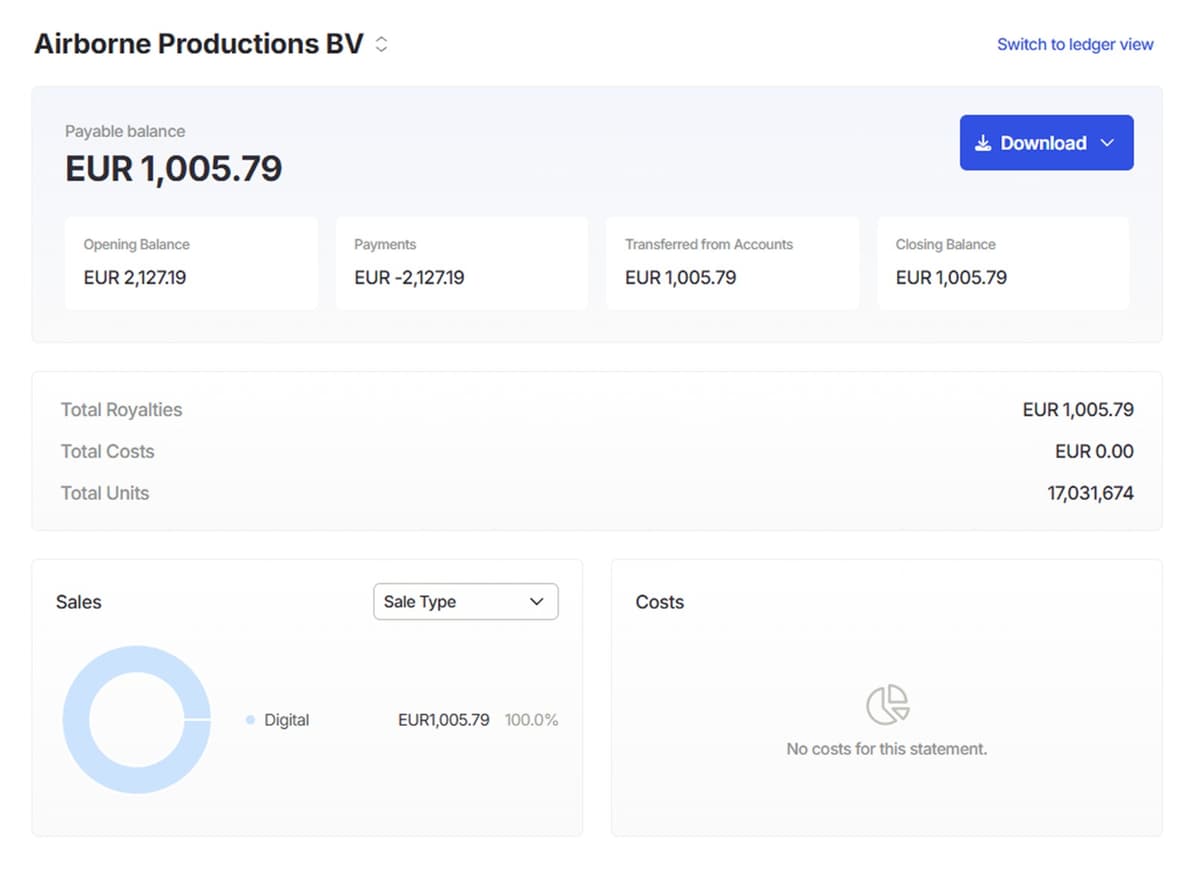
Qlero connects sales-file imports, repertoire and contract terms to royalty calculations and statements. A sales template maps a provider's file into Qlero's fields. Calculations use each participating contract's share, royalty base and matching rate. Artists with the required portal access can review released statements and download statement PDFs and sales-detail CSVs.
Creating custom templates requires Pro or Enterprise. Some advanced calculation options also require those plans; check your deal terms against the calculation guide. Total royalties are not necessarily the payable balance: opening balances, costs, advances and other entries can affect the result. With the Payments add-on enabled, the documented manual workflow requires your team to transfer money outside Qlero, then record the payments.
How do I get started with Qlero's royalty management system?
Qlero is a platform, so setup normally starts with onboarding rather than a traditional local installation. Your team would typically import or configure catalog data, contracts, payees, royalty rates, territories, income files and reporting templates.
A sensible setup process usually includes: mapping your existing catalog, contracts and payees; importing historical balances, advances and recoupable costs; connecting or importing income reports from distributors and platforms; testing royalty calculations before the first live reporting period; and reviewing statement templates with finance, legal and rights teams.
Qlero's role is to replace fragmented manual workflows with one controlled royalty management process.
Can royalty management processes be automated?
Yes, many parts of royalty management can be automated. Income ingestion, contract rule application, recoupment, split calculation, statement generation and reporting workflows are all good candidates for automation.
Automation does not remove the need for review. It reduces repeated manual work and lowers the risk of copy-paste errors, but the business still needs clean metadata, correct contracts and a final approval routine before statements are distributed.
Do I still need to double-check royalty statements before sending them?
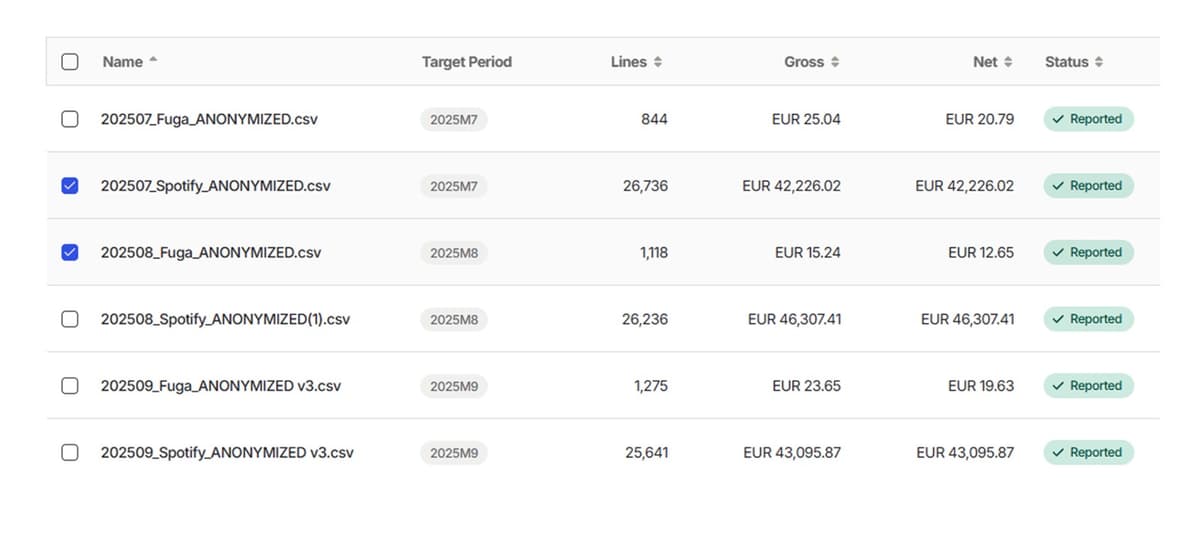
Yes. Start with imported sales lines: a file marked Ready may still contain invalid rows or require contract work. Resolve unmatched ISRCs and review contract issues before relying on the statement totals.
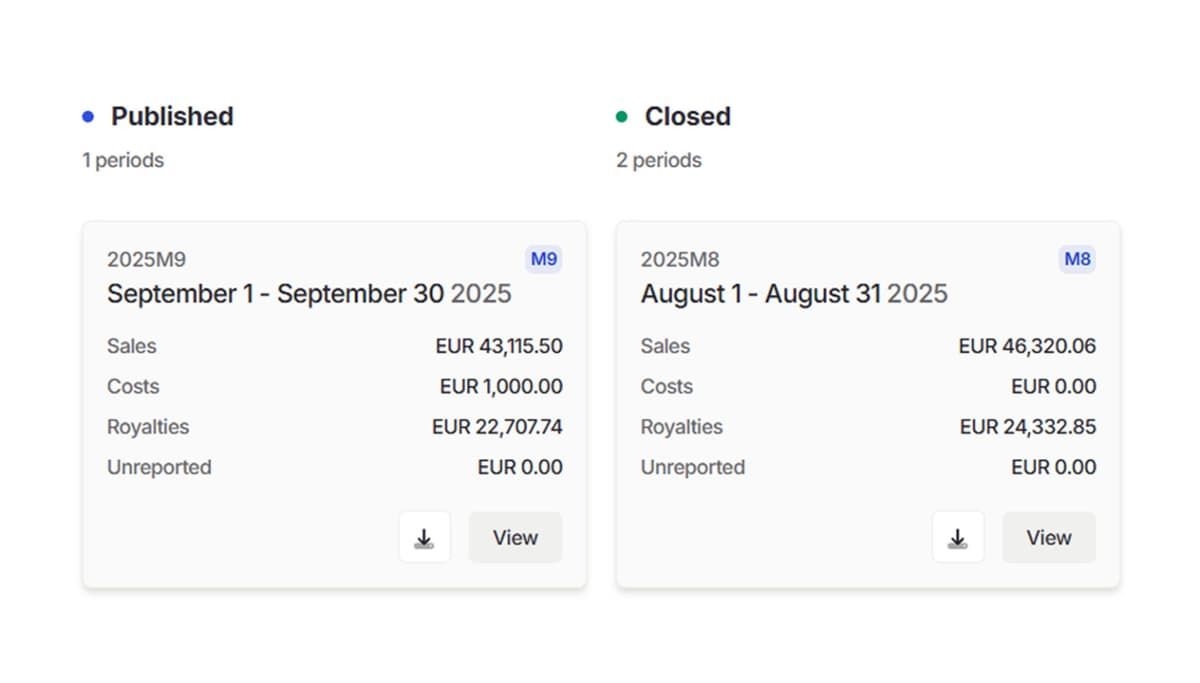
In Reporting › Periods, check royalty totals, statement balances and Unreported entries. Review the generated PDF and CSV files before release. The Advanced workflow lets you publish before closing; the Simplified workflow publishes and closes together. There is no Unpublish action, and a closed period cannot be reopened or recalculated. Follow your approval process before either action. A Reported sales row means all participating contracts have been reported; it does not confirm that the artist has been paid. See the statement review and release guide.
Can Qlero work with distributor reports such as The Orchard, FUGA, Believe and others?
Compatibility depends on the actual file layout, not just the distributor's name. Qlero's sales-file setup guide explains how to use an existing template when its provider and columns match your export, or create a custom template for another layout. Creating custom templates requires Pro or Enterprise.
Before relying on reports from The Orchard, FUGA, Believe or another provider, bring a representative export to your Qlero setup review. Check the required fields, identifiers, dates, currencies and mapped values, then import a small file and review its line statuses and totals before calculation. A Ready file can still contain invalid rows. Treat compatibility with your exact export as something to verify during setup.
Can Qlero sync with my accounting system?
Qlero is royalty accounting software, but royalty accounting is not the same thing as general bookkeeping. Royalty systems calculate what is owed to artists, writers, licensors and partners. Accounting systems record invoices, payments, taxes, liabilities and financial statements.
In practice, many teams use royalty software alongside bookkeeping software. The royalty system produces payable balances and statements; the accounting system handles payment records, ledgers and financial compliance. Whether a direct sync is available depends on your accounting platform, setup and required export format.
What are reasonable artist royalty rates today?
There is no universal standard. Artist royalty rates depend on deal type, territory, bargaining power, label investment, distribution fee, ownership of masters, marketing spend, recoupment terms and whether the artist is licensed, signed or self-releasing.
Broadly speaking, traditional label deals may give the artist a royalty percentage after recoupment, while licensing or profit-share deals can give the artist a higher share because the artist or licensor may already own the master. Distribution deals often work on a fee or percentage of net receipts. The headline percentage matters less than the full contract: recoupment, deductions, reserves, ownership, term, audit rights and reporting frequency all affect the real payout.
Which royalty streams should labels and publishers track?
A serious royalty management setup should separate the main rights streams instead of treating all income as one number. Important categories include: master royalties from streaming, downloads, physical sales and licensing; publishing royalties from mechanical, performance and sync income; neighbouring rights for performers and recording rightsholders; producer, mixer, remixer and featured artist royalties; and recoupment of advances, recording costs, marketing costs and approved expenses.
In the United States, for example, The Mechanical Licensing Collective administers digital audio mechanical royalties, while other organisations handle other rights. That is a useful reminder that royalty reporting is rarely handled by one source only.
How can royalty management differ between European countries and the US?
Royalty management can differ significantly between European countries and the US because rights, collection societies, tax rules, reporting standards and contract customs are not handled in the same way everywhere. In Europe, neighbouring rights and collective management often play a larger role, and each country may have its own societies, tax treatment and payment routines. In the US, royalty reporting is often more closely tied to direct label or publisher accounting, SoundExchange for certain digital performance royalties, and The Mechanical Licensing Collective for digital mechanical royalties.
For labels, publishers and distributors working internationally, this means royalty statements should clearly separate master income, publishing income, neighbouring rights, mechanical royalties, performance royalties, deductions, tax handling and currency conversion. A royalty management system like Qlero helps organise these differences in one workflow, but contracts and local rules should always be checked before statements are approved and sent.